
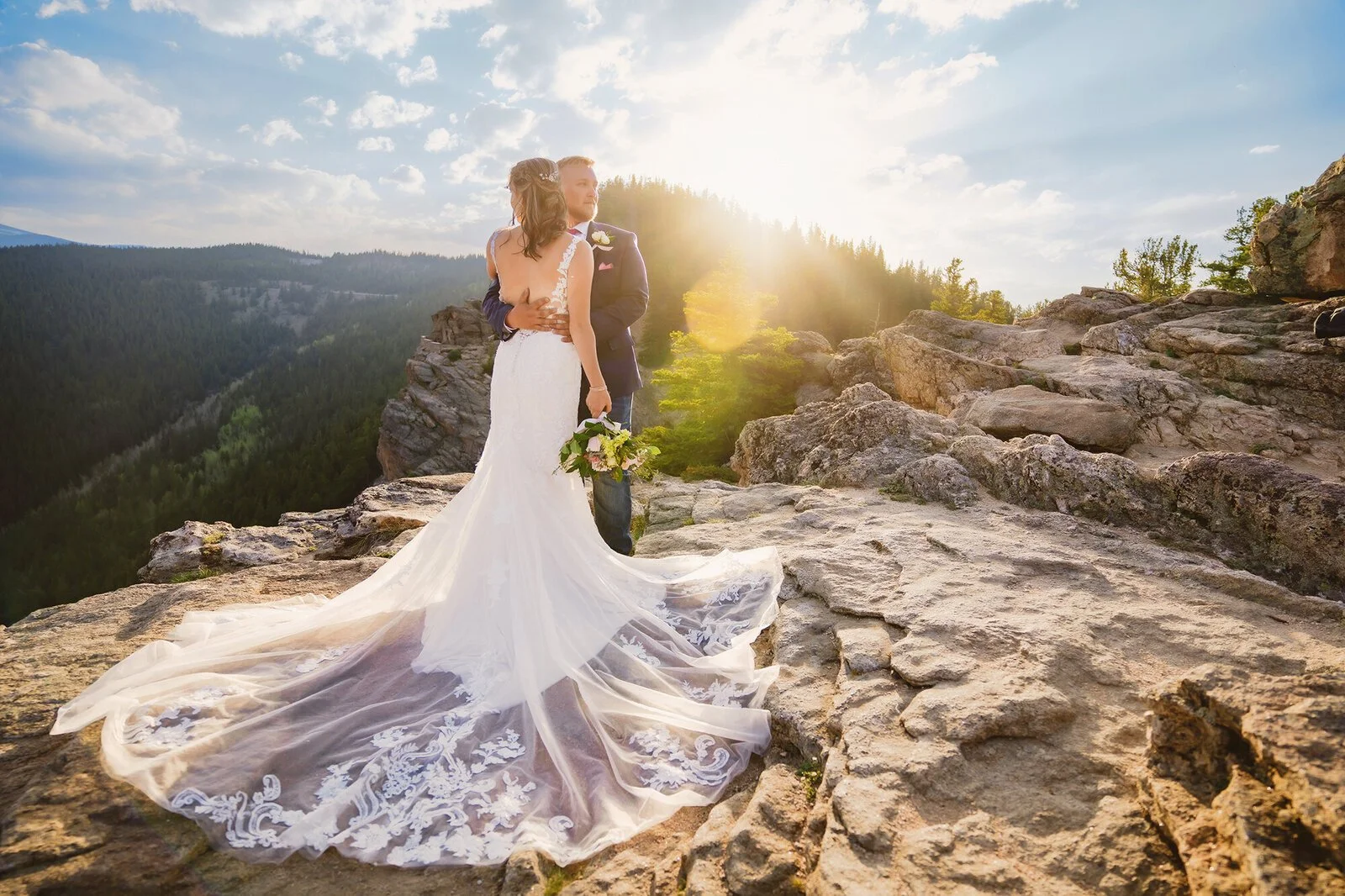
Why You Shouldn’t Get Married at Juniper Pass, Colorado in 2026
Hey there! My name’s Iver Marjerison.
I’m a Colorado micro-wedding planner, and over the past five years, I’ve planned over a hundred elopements at Juniper Pass. In fact, up until this year, it was one of my favorite elopement locations in Colorado.
Unfortunately, after years of this location flying under the radar, Simply Eloped (owned by The Knot / Wedding Wire) recently added it to their Colorado guide. That means this location has now gone from being one of the best kept secret elopement locations in Colorado, to one of the most popular.
The problem is: this location is very small, and parking is limited.
This location is awesome, when you have the place to yourself, but if there is another wedding (or two, or three) in the area, there simply isn’t enough space to share.
Professional Opinion:
Having your Juniper Pass wedding at sunrise is the best way to beat the crowds, with Tuesday & Wednesday being the slowest days of the week. Definitely steer clear of weekends, carpool as much as possible, and give your group extra time to find parking and secure a spot.
Looking for More Options?
Juniper Pass is still a great spot!
But if you’re still considering other options, Text or Email me the word “info” to learn about all the other spots I use!
Iver@ColoradoMicroWeddings.com
720-598-2862
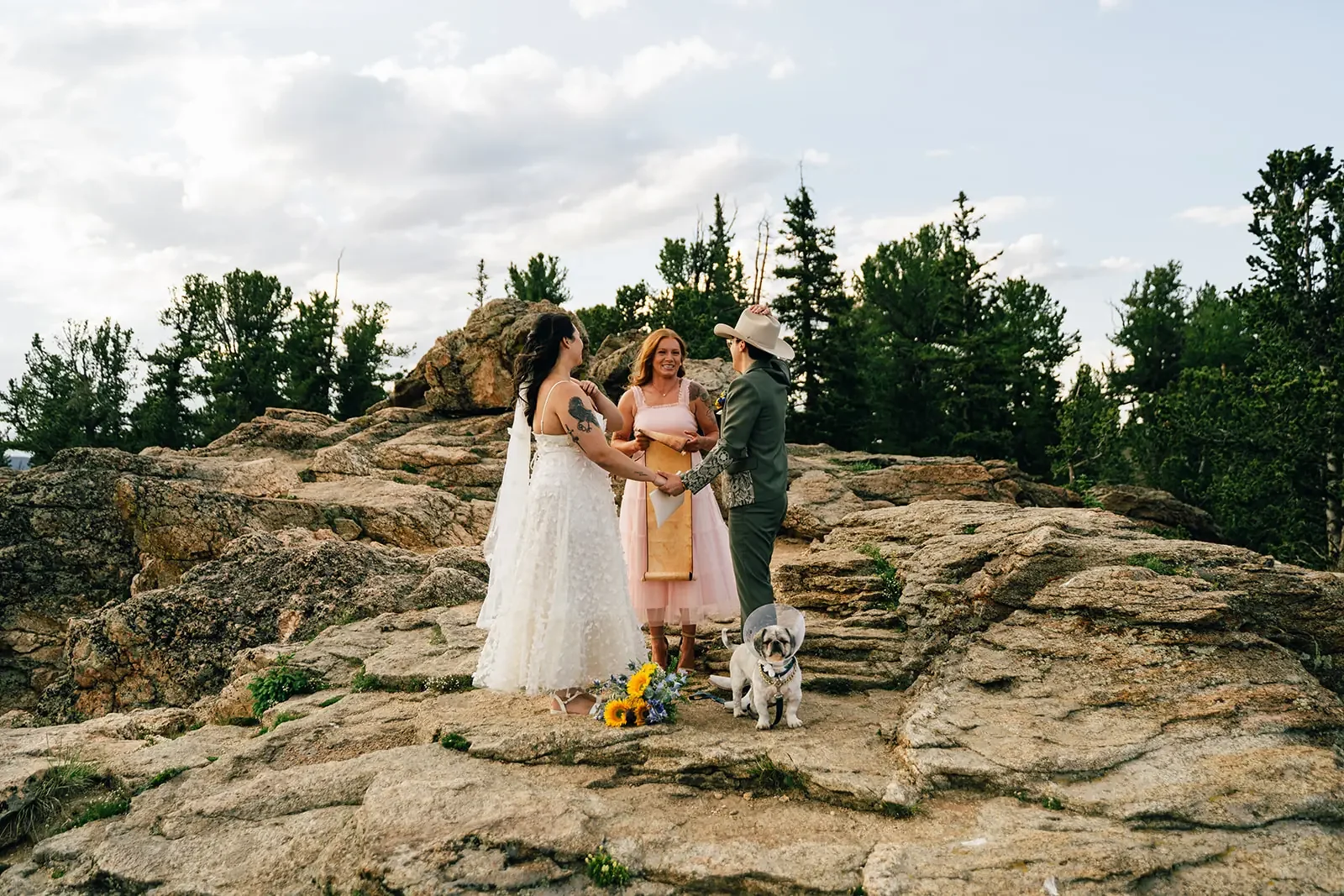
Everything You Need to Know About Getting Married at Juniper Pass
Pass Lake is located on Arapahoe National Forest land in Clear Creek County, Colorado, just off highway 103, outside Idaho Springs, Colorado. As national forest land, small weddings and elopements are generally allowed without a permit, though group size limits and photography permit requirements may apply.
Elevation: ~10,932 ft
Accessibility: Mid-June through Mid-October—it’s packed with snow and ice in the winter.
Distance from Denver International Airport: Estimated 1 hour and 15 minutes
Nearest Town: 15mins from Idaho Springs
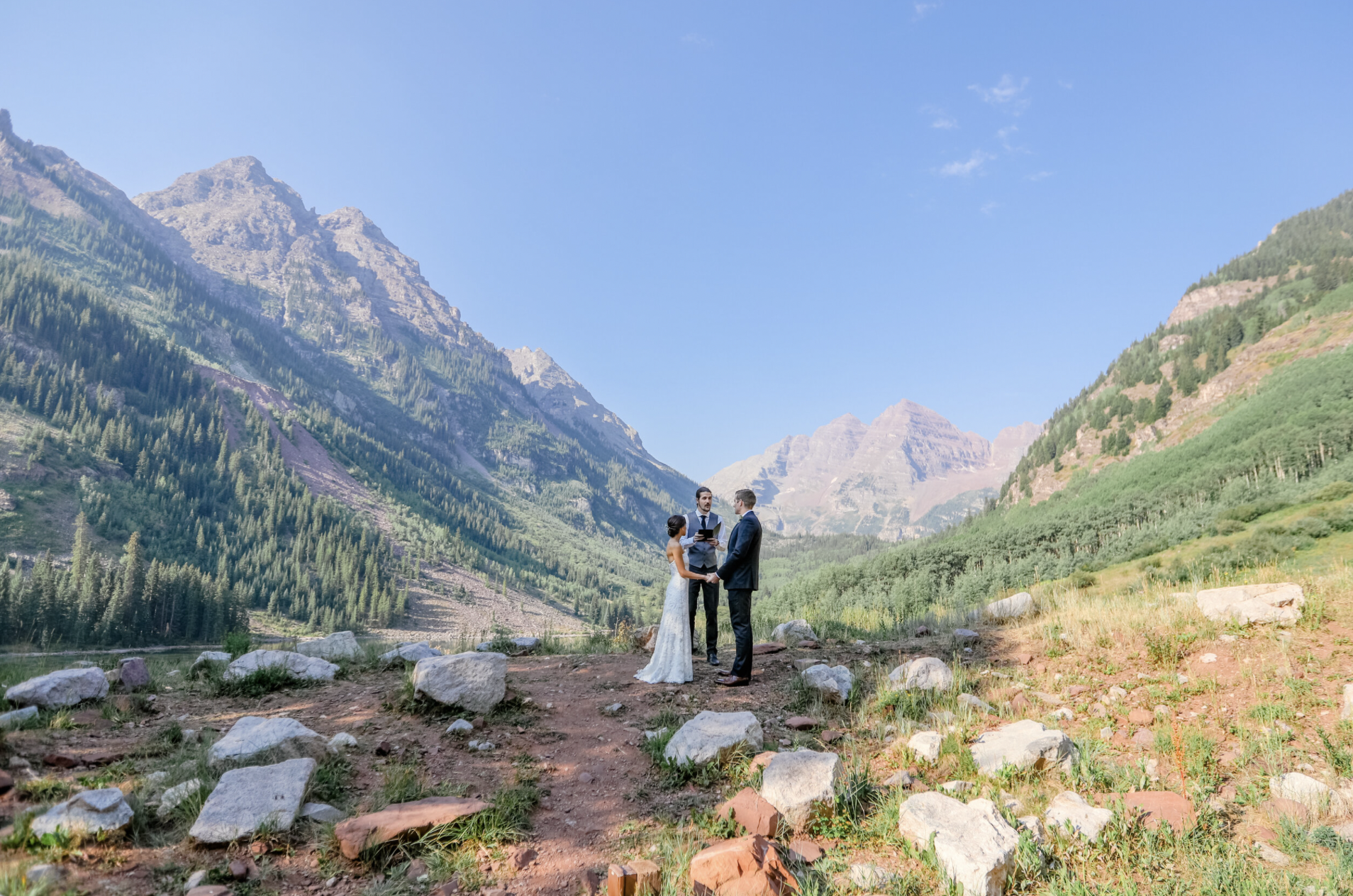
Pros: Beautiful mountain views, and just a short walk from the parking area.
Cons: This is a very small area, with limited parking. If there’s other groups around, it may be uncomfortable.
Planning & Marriage License
Getting married at Juniper Pass, is fairly simple, just make a timeline, get the marriage license, and secure any needed vendors, like photographer, officiant, etc.
Jump to How-To Get Married
Permits & Max Group Size
Juniper Pass is most appropriate for intimate, low-impact ceremonies. Personal, non-commercial photography does not require a permit, and while Arapaho National Forest only mandates permits for gatherings of 75 or more people, practical and environmental considerations make much smaller groups a better fit. In reality, ceremonies with six guests or fewer align best with Leave No Trace principles and the limited space at this alpine location. Larger groups frequently lead to parking congestion, crowding, and unintended damage to sensitive vegetation. All ceremonies must remain strictly leave-no-trace, with no arches, décor, or alterations to the natural setting.
Jump to Permits & Group Size
Best Day, Month, and Time
The best option is a Tuesday or Wednesday, Mid June through Mid October, at sunrise. This is for optimal lighting, and when the area is least busy. However, sunset lighting is also very nice at this location!
Jump to Best Month, Day & Time
Good to Know
Juniper Pass is not handicap accessible. Dogs are allowed, but must remain on a leash. Throwing flowers is not allowed. Chairs and decorations are not allowed. Lots more info…
Jump to FAQs
Other locations?
I’ve got planning guides, packages, and resources for all the best small wedding and elopement locations across Colorado.
Jump to Other Guides & Locations
Need Help Planning Juniper Pass Wedding?
Colorado MicroWeddings
7+ Years of Service | 500+ Five Star Reviews
I’ll work with you 1-on-1 to fully plan your day.
Plus, you’ll get exclusive discounts with Colorado’s top photographers, officiants, florists, videographers and more!
Email me the word “Juniper Pass”
Iver@ColoradoMicroWeddings.com
How-to Plan a Wedding at Juniper Pass
Pick a date and time
This part is really up to you! Checkout this section below for the best day, time, and month to get married at Loveland Pass.Hire your vendors
After settling on a date and time, the next step is to book any vendors you plan to work with—such as an officiant, photographer, florist, or videographer—and confirm that they follow Arapaho National Forest regulations and use policies.Finalize logistics and timeline
Leading up to the wedding, you’ll confirm arrival times, and plans for the day with your vendors and guests.Obtain your Colorado marriage license
Colorado makes getting a marriage license simple! You and your fiance simply need to go into a Colorado County Clerk during business hours to pick up the license. Denver and Breckenridge have their own office, but they are difficult to work with. I suggest finding another County Clerk nearby. Here’s my full Colorado Marriage License Guide.Get Married!
On the wedding day, you and your guests will gather with your vendors at Juniper Pass for the ceremony. After exchanging vows and signing the marriage license, you’ll take photos at the site before most couples head to a nearby restaurant to celebrate together.
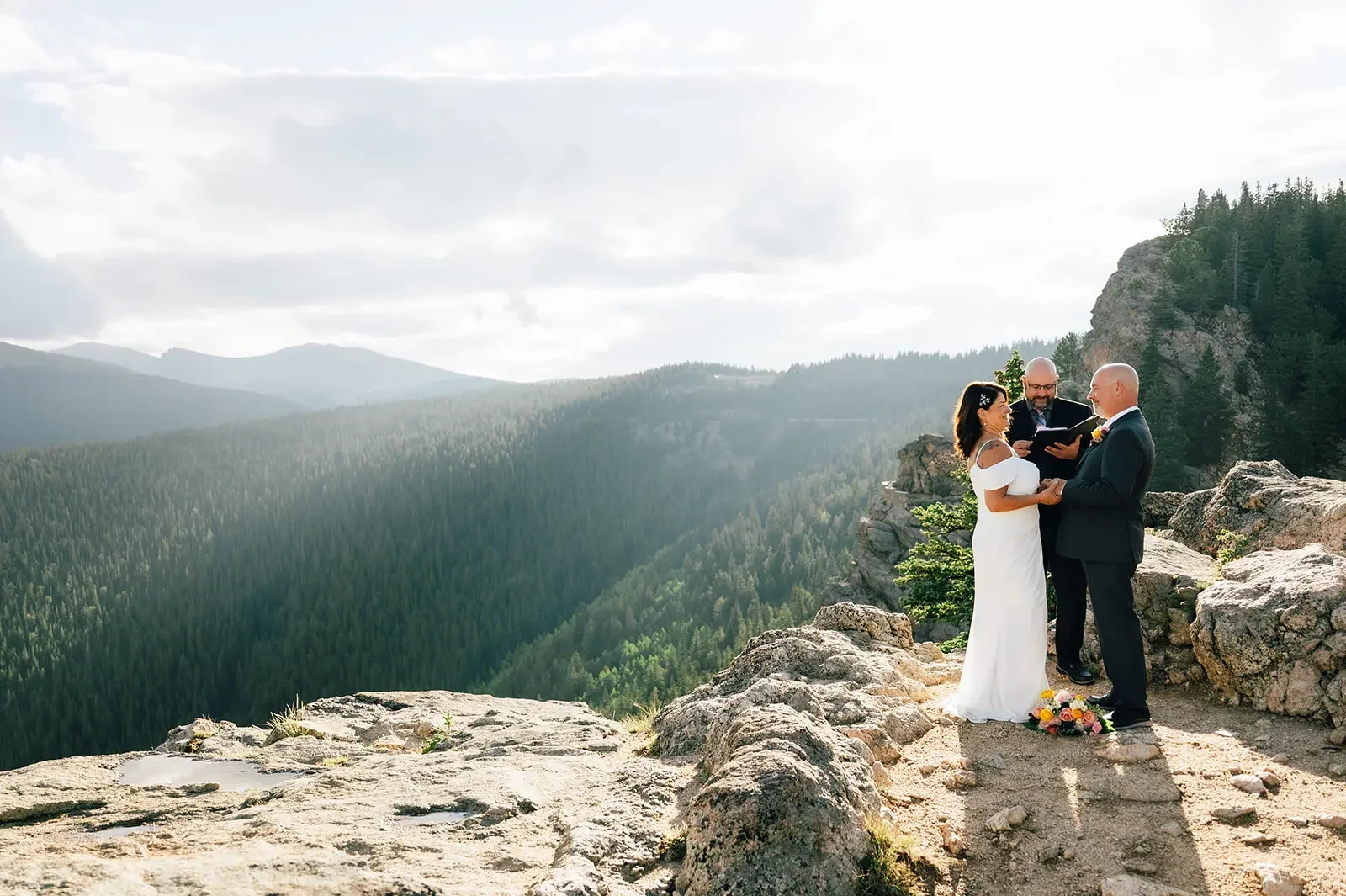
Wedding Permits & Max Group Sizes for Juniper Pass
Professional Micro-Wedding Planner Opinion:
Juniper Pass works best for very small ceremonies. Once a group grows beyond about six guests, logistical issues tend to stack up quickly. Parking is extremely limited, trails are narrow, and facilities are minimal—only vault-style restrooms are available. From what I’ve seen at this location, larger groups often struggle with congestion, inadvertently disrupt other visitors, and sometimes cause environmental damage simply due to lack of space. For gatherings of ten or more people, I generally recommend choosing a designated ceremony venue rather than National Forest land to ensure a smoother, more respectful experience for everyone.
Looking for a beautiful mountain ceremony site with 10+ guests?
Checkout Windy Point (Breckenridge)
Checkout Sapphire Point (Breckenridge)
Checkout Rocky Mountain Wedding Park (Estes Park)
Text or Email me the word “info” to learn about all the spots we use!
Iver@ColoradoMicroWeddings.com
720-598-2862
Leave No Trace:
While this outdoor ethics framework does not establish a formal guest limit for Juniper Pass, it does emphasize keeping groups very small—typically between two and six people—when using fragile alpine areas. Smaller gatherings help reduce crowding, protect vegetation, and lessen impacts on other visitors.
Arapahoe National Forest:
The Arapaho National Forest does provide specific guidance for weddings, elopements, and photography, and permit requirements depend on group size, commercial activity, location, and potential resource impacts. Events involving 75 or more participants or spectators are considered group use and require a Special Use Permit. For gatherings under 75 people, the Forest Service evaluates whether the event is commercial or non-commercial to determine if a permit is needed.
Professional photographers taking photographs for a client’s personal, non-commercial use do not need a permit on Arapaho National Forest land. However, photography or filming intended for resale, advertising, marketing, or other business promotion may require a permit. Similarly, events that charge participation fees or involve the sale of goods or services are generally considered commercial and may require permitting, even if the group size is small.
Regardless of permit requirements, all ceremonies must follow Arapaho National Forest resource-protection rules. This includes maintaining strict leave-no-trace practices, using only durable surfaces, and avoiding any activity that disturbs vegetation, soil, wildlife, or natural features. Arches, décor, structures, and alterations to the landscape are not permitted, and ceremonies must not impact sensitive alpine environments or other visitors’ access to the area.
Best Month, Day & Time
For the quietest and most flexible experience, early-morning ceremonies on a Monday or Tuesday tend to work best at Juniper Pass, particularly during the prime season between mid-June and mid-October.
What’s the Best Month?
Juniper Pass is generally accessible for weddings from late spring through early fall, with the most reliable conditions occurring between mid-June and mid-October. Outside of this window, weather becomes far less predictable—snowfall is common from late fall through early summer, and early June often brings lingering mud from snowmelt.
Checkout my full guide on The Best Month to Elope in Colorado
What’s the Best Time of Day?
Juniper Pass offers minimal natural shade, which makes timing especially important for photography. The softest light typically occurs at sunrise or in the hours leading up to sunset. Because surrounding mountains cause the sun to dip earlier than expected, an experienced photographer can help fine-tune ceremony timing based on the date and seasonal light conditions.
Checkout my full guide on The Best Time of Day to Elope in Colorado
What’s the Best Day of the Week?
The best day of the week to elope at Juniper Pass is Tuesday or Wednesday, which are the least busy days in the area—it’s always nice to beat the crowds!
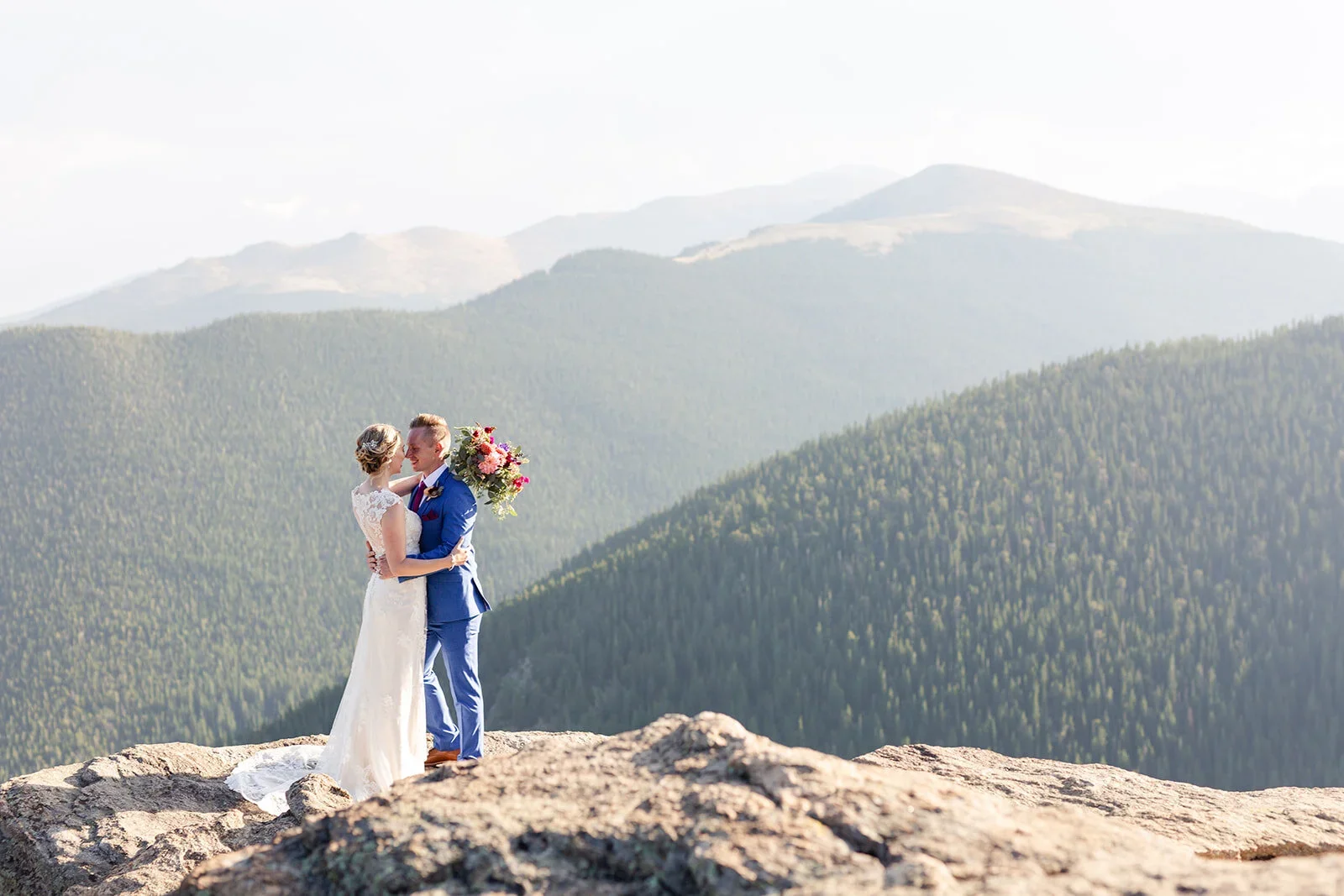
Juniper Pass Wedding FAQs
What is the best month to get married at Juniper Pass?
The best time to get married at Juniper Pass is typically mid-June through mid-October, when access and weather conditions are most reliable. Outside of this window, snow and ice often linger well into late spring, and early June can still be muddy from snowmelt. Juniper Pass is not accessible in winter due to heavy snow accumulation.
What time of day is best for a Juniper Pass ceremony?
Juniper Pass offers very little natural shade, so lighting is best at sunrise or in the hours leading up to sunset. Because surrounding mountains cause the sun to drop earlier than expected, ceremony timing should be adjusted based on your specific date. An experienced photographer can help plan around seasonal light conditions.
What day of the week is best for a Juniper Pass wedding or elopement?
Mondays and Tuesdays tend to be the quietest days at Juniper Pass. Weekends and peak summer days see more visitors, so choosing a weekday—especially early in the morning—offers the most privacy and flexibility.
How do I get to Juniper Pass?
Juniper Pass is accessed from I-70 westbound via the Idaho Springs exit (#240). From there, take Highway 103, which climbs toward Echo Lake and Mount Evans. The road is fully paved and does not require four-wheel drive during the accessible season, though conditions can vary with weather.
How high is Juniper Pass, and will altitude be an issue?
Juniper Pass sits at approximately 10,932 feet above sea level. Altitude affects everyone differently, and some people may experience shortness of breath, headaches, or fatigue. Staying hydrated and arriving in Colorado a few days early can help with acclimation.
Do I need a permit to get married at Juniper Pass?
Generally speaking, small weddings do not require a permit for Juniper Pass. Permit requirements depend on group size, commercial activity, location, and potential resource impact. Events involving 75 or more participants or spectators are considered group use and require a Special Use Permit. Smaller gatherings are evaluated based on whether the event is commercial or non-commercial.
Professional photographers taking photos for a couple’s personal, non-commercial use do not need a permit. However, photography or filming intended for resale, advertising, marketing, or other business promotion may require permitting. When in doubt, couples are encouraged to contact the Arapaho National Forest district directly.
How many guests can I have at a Juniper Pass ceremony?
While there is no official guest limit for small ceremonies, Juniper Pass is best suited for very small, low-impact gatherings. Groups of six guests or fewer are strongly recommended due to limited parking, narrow trails, and the sensitivity of the alpine environment. Larger groups often create crowding and resource concerns.
What if I want more than 10 guests?
Couples planning to invite 10 or more guests should consider a designated ceremony venue rather than National Forest land. Reserved sites provide better parking, accessibility, and amenities for larger gatherings while reducing environmental impact. Great alternatives include Windy Point in Breckenridge, Sapphire Point in Breckenridge, or the Rocky Mountain Wedding Park in Estes Park—all offering beautiful mountain settings with better accommodations for larger groups.
Can I set up an arch or decorations at Juniper Pass?
No. Arapaho National Forest rules prohibit installing arches, décor, structures, or props; attaching items to vegetation or rocks; or disturbing natural features. All ceremonies must remain strictly leave-no-trace and use only durable surfaces.
Is alcohol allowed at Juniper Pass?
Alcohol is generally allowed on National Forest land unless restricted by a site-specific Forest Order. Any alcohol consumption must be legal, low-key, and fully leave-no-trace.
Are there restrooms or facilities at Juniper Pass?
Yes. Vault-style restrooms are available at Juniper Pass. However, potable water is not available, so plan accordingly. Picnic tables are also present at the site.
How long does a Juniper Pass ceremony usually take?
Most ceremonies at Juniper Pass last 10–15 minutes, which helps minimize impact and reduces interference with other visitors.
Is Juniper Pass crowded?
Juniper Pass is a popular destination, especially during summer and fall. Crowds are most common on weekends and mid-day. Choosing a weekday morning offers the best chance for a quieter experience.
What should we wear for a Juniper Pass wedding?
Wear sturdy footwear suitable for uneven ground and plan for changing mountain conditions. Layers are essential, as wind, cold temperatures, and sudden storms are common—even in summer.
What is the weather like at Juniper Pass?
At nearly 11,000 feet, Juniper Pass experiences true alpine weather. Summer temperatures often range from the 40s to 60s°F, with strong winds and frequent afternoon thunderstorms from June through August. Weather can change quickly, so it’s important to be prepared.
Is there cell service at Juniper Pass?
Cell service is limited and unreliable. Couples and guests should plan ahead and confirm meeting details in advance.
Where are the best photo locations near Juniper Pass?
Juniper Pass itself offers expansive alpine views, and Echo Lake, located just down the road, is a popular nearby option for portraits with a very different look, including water and tree-lined backdrops.
Can we get married at Juniper Pass in winter?
No. Juniper Pass is typically not accessible in winter due to heavy snow and ice, and ceremonies are not feasible during that season.
Looking for Other Location Options?
This guide is part of our Colorado Small Wedding & Elopement Guides
View All Location Guides
Want Help Planning Your Colorado Small Wedding?
I have everything-you-need for a beautiful and stress-free small wedding!
All-Inclusive Packages | 100% Customizable | 0 - 80 Guests
Vendors | Venues | Marriage License | Permits | Dining | Lodging
View All-Inclusive Elopement Packages
