
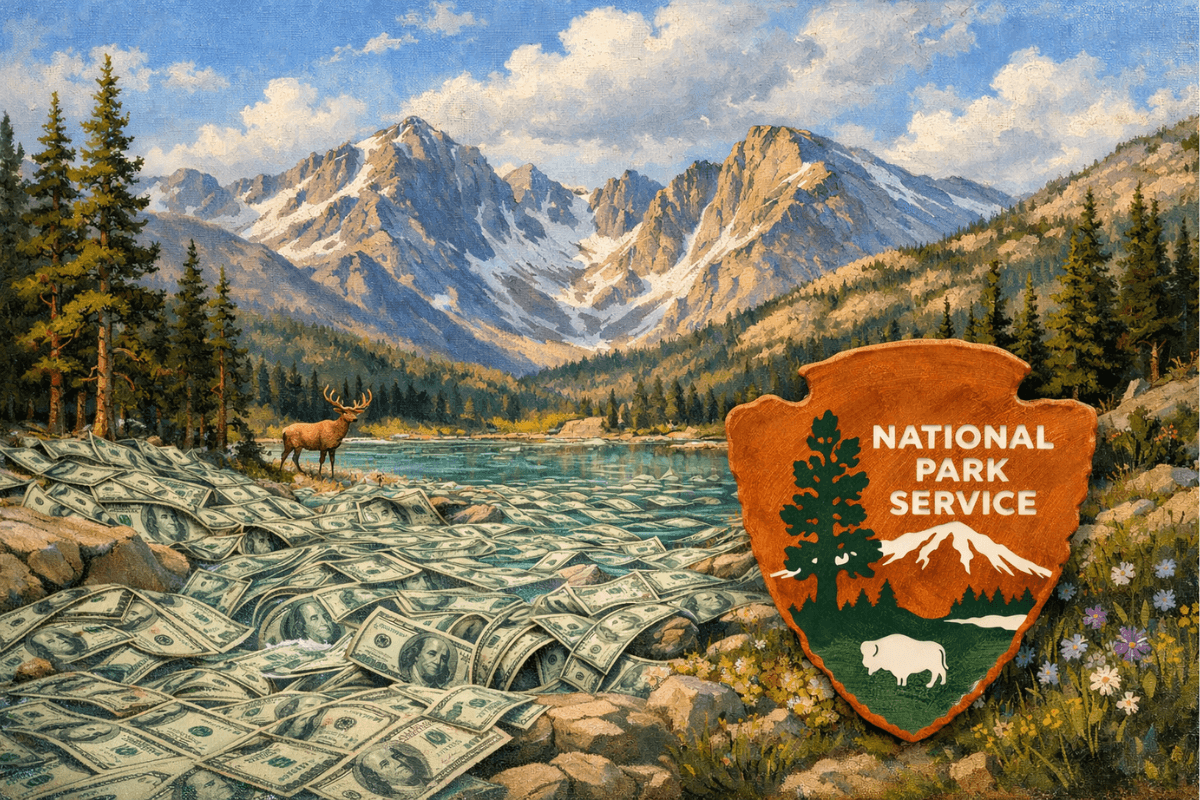
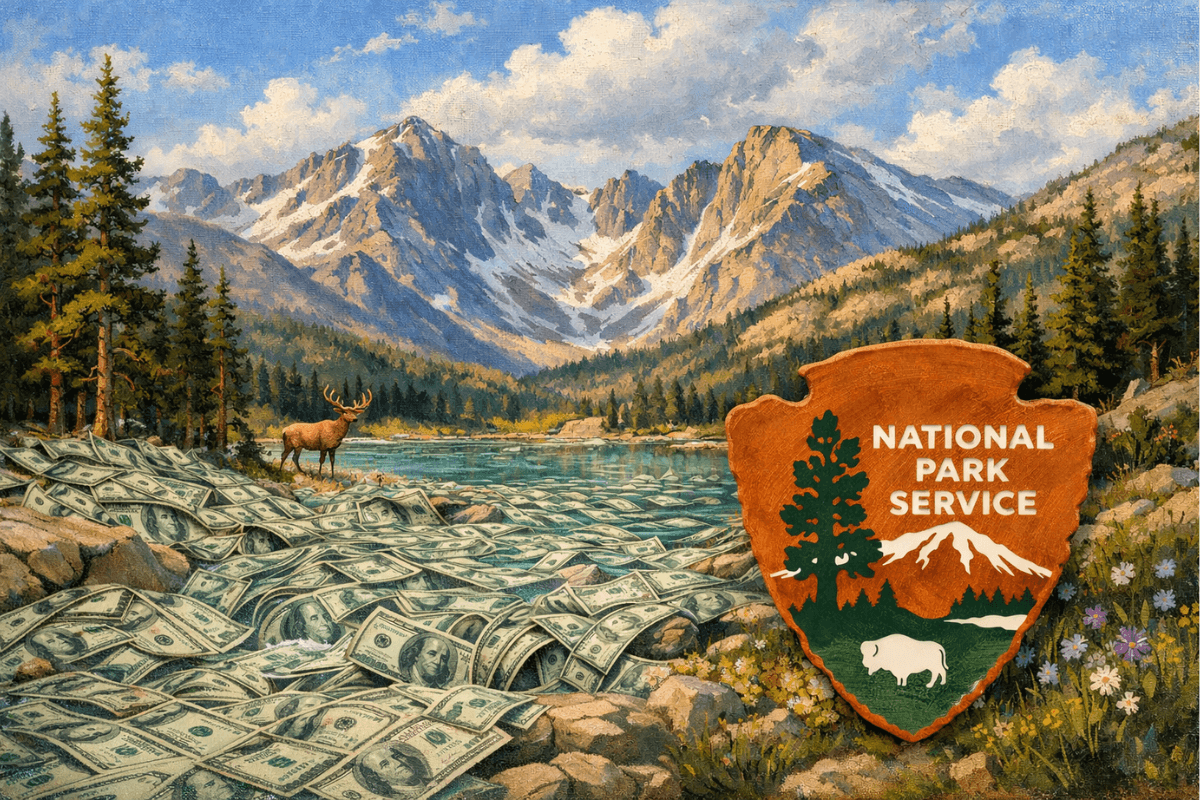
Everything You Need to Know About RMNP's New Fee for International & Non-US Visitors
Starting January 2026, Rocky Mountain National Park will charge international visitors, foreign tourists, and non-US citizens a $100 per-person entrance fee — officially called the 'nonresident fee' or 'non-resident fee.
The fee is in addition to the standard park entrance fee — or nonresidents can buy a $250 annual pass
U.S. passport, state-issued ID, or green card gets you the resident rate
The fee applies to 11 national parks total, including Yellowstone, Grand Canyon, and Yosemite
No exemptions for weddings — every nonresident guest 16+ pays individually
A New Fee Hits America's Most Popular Parks
Starting January 1, 2026, visitors who can't show proof of U.S. citizenship or residency will pay an additional $100 per person to enter 11 of the country's most visited national parks. Rocky Mountain National Park is on the list. Alternatively, nonresidents can purchase an America the Beautiful Annual Pass for $250.
The full list: Acadia, Bryce Canyon, Everglades, Glacier, Grand Canyon, Grand Teton, Rocky Mountain, Sequoia & Kings Canyon, Yellowstone, Yosemite, and Zion.
The fee comes from an Executive Order signed by President Trump titled "Making America Beautiful Again by Improving Our National Parks." The stated goal is to generate revenue for park infrastructure and improve the visitor experience. The money collected will go toward maintenance, access improvements, and recreational upgrades across federal lands.
This article breaks down how the fee works, who pays, who's exempt, and how it affects weddings and elopements at Rocky Mountain National Park.
How the Fee Works
The $100 nonresident fee is charged per person, not per vehicle. It applies to anyone 16 or older who can't show proof of U.S. citizenship or residency. This fee is on top of the standard park entrance fee. Alternatively, nonresidents can purchase an America the Beautiful Annual Pass for $250.
To get the resident rate, you'll need to show proof of U.S. citizenship or residency at the gate. Acceptable documents include:
U.S. passport
State-issued driver's license or ID
Permanent resident card (green card)
The America the Beautiful Annual Pass is also changing. U.S. residents pay $80. Nonresidents pay $250 — but that pass covers the passholder's entire vehicle, 2 motorcycles, or the passholder plus three additional adults.
Passes purchased before January 1, 2026 will still be honored under the original terms.
One more change: fee-free days (like National Public Lands Day) will now only apply to U.S. residents. Nonresidents pay full price year-round.
What Does "Nonresident" Mean?
The name is confusing. "Nonresident" sounds like it means someone who doesn't live here — but that's not how the National Park Service is using it.
Under this policy, "nonresident" means anyone who is not a U.S. citizen or permanent resident (green card holder). It doesn't matter where you live.
If you're a U.S. citizen living in Tokyo, you're exempt. If you've lived and worked in Denver for five years on a work visa, you pay the fee.
It's about immigration status, not your address.
Examples of Who Pays and Who Doesn't
Who's Exempt
✅ U.S. citizen living abroad — No fee (bring your passport)
✅ U.S. citizen living in any state — No fee (bring your driver's license)
✅ Green card holder — No fee (bring your card)
✅ Anyone with a valid state-issued driver's license or ID — No fee (per NPS accepted documents)
✅ Child under 16 from any country — No fee
Who Pays the $100 Fee
❌ Canadian tourist on vacation — Pays $100
❌ European tourist visiting on ESTA/visa waiver — Pays $100
❌ Mexican visitor on B-1/B-2 tourist visa — Pays $100
❌ Any visitor 16+ without U.S. passport, green card, or state-issued ID — Pays $100
Gray Area
⚠️ Work visa holder (H-1B, L-1, etc.) with state-issued ID — Unclear. NPS lists state driver's licenses as acceptable proof of residency but doesn't address immigration status. Bring your ID and be prepared to ask at the gate.
⚠️ International student (F-1 visa) with state-issued ID — Unclear. Same situation. If you have a valid state driver's license, you may be exempt — but it's not explicitly stated.
Getting Married at Rocky Mountain National Park: How the New Fee Affects Weddings
Planning a wedding, elopement, or vow renewal at Rocky Mountain National Park? Here's what you need to know about costs in 2026.
A $300 Special Use Permit is required for weddings, elopements, vow renewals, and other ceremonies in the park (RMNP wedding guide). Groups visiting with a wedding permit are exempt from timed entry requirements — but you still need to pay the standard per-vehicle entrance fee.
Starting January 2026, the nonresident fee adds another layer. Every person in your group who is 16 or older and can't show proof of U.S. citizenship or residency will pay the $100 fee individually. Alternatively, nonresidents can purchase an America the Beautiful Annual Pass for $250, which may make sense if your group is entering the park on multiple days.
Example: A destination wedding with 20 guests
Let's say you're a couple from the UK planning an elopement with 18 guests flying in from abroad. All 20 people are nonresidents over 16, visiting for one day.
Special Use Permit: $300
Vehicle entrance fees: ~$30–60 (depending on vehicles)
Nonresident fees: $100 x 20 = $2,000
That's $2,000 in nonresident fees alone — on top of your permit and entrance fees.
If your wedding spans multiple park days — say a rehearsal day plus the ceremony — the $250 annual pass becomes the better deal at 3+ entries per person.
The bottom line for destination weddings
If you're planning a wedding at RMNP with international guests, budget for this. The fee is per person, not per group, and there's no wedding exemption.
Guests who can show proof of U.S. citizenship or residency are exempt — make sure they bring a valid U.S. passport, state-issued ID, or green card.
Need help planning your Rocky Mountain National Park elopement?
I’ve planned hundreds of weddings in the park over the past seven years, and would be happy to help!
RMNP Elopement Packages
FAQs
When does this fee start?
January 1, 2026.
How much is the nonresident fee?
$100 per person, on top of the regular entrance fee. Alternatively, nonresidents can purchase an America the Beautiful Annual Pass for $250.
Is this per vehicle or per person?
Per person. Everyone 16 and older who can't show proof of U.S. citizenship or residency pays.
I'm a U.S. citizen but I live overseas. Do I pay?
No. Bring your U.S. passport as proof.
I have a green card. Do I pay?
No. Bring your permanent resident card.
I have a state-issued driver's license but I'm not a citizen. Do I pay?
Unclear. The NPS lists state driver's licenses as acceptable proof of residency, but doesn't specify immigration status. Bring your license and be prepared to ask at the gate.
I'm visiting on a tourist visa. Do I pay?
Yes, you will need to pay the nonresident fee for applicable national parks.
I'm an international student studying in the U.S. Do I pay?
Yes — unless you have a state-issued ID, which the NPS lists as acceptable proof. This is a gray area.
My kid is 14 and not a U.S. resident. Do they pay?
No. The fee only applies to visitors 16 and older.
I bought an America the Beautiful pass in 2025. Is it still valid?
Yes. It will be honored for 12 months from purchase and covers nonresident fees for everyone in your vehicle.
Are fee-free days still free for international visitors?
No. Starting in 2026, fee-free days only apply to U.S. residents.
What does the $250 nonresident annual pass cover?
It covers the pass holder's entire vehicle, or 2 motorcycles, or the pass holder plus 3 additional adults.
Is the annual pass worth it for nonresidents?
Only if you're visiting 3 or more of the 11 parks charging this fee. For a single park visit, the $100 day fee is cheaper.
Do wedding guests at Rocky Mountain National Park have to pay the nonresident fee?
Yes. Every guest 16 or older who can't show proof of U.S. citizenship or residency pays the $100 fee individually. There's no exemption for weddings or special events.
Does a wedding permit exempt my group from entrance fees?
No. A Special Use Permit ($300) exempts your group from timed entry requirements, but everyone still pays the standard vehicle entrance fee — and now the nonresident fee if applicable.
How much will a destination wedding cost in nonresident fees alone?
It adds up fast. A wedding with 20 international guests over 16 would pay $2,000 in nonresident fees ($100 x 20), on top of your $300 permit and vehicle entrance fees.
Do international visitors pay extra at Rocky Mountain National Park?
Yes. Starting January 1, 2026, non-US residents aged 16 and older pay a $100 per-person fee on top of the standard entrance fee at Rocky Mountain National Park. This applies to 11 of the most visited national parks.
Is there a fee for non-US citizens at Rocky Mountain National Park?
Yes. Non-US citizens without proof of permanent residency pay $100 per person (age 16+) starting January 2026. Alternatively, non-residents can purchase an America the Beautiful Annual Pass for $250, which covers the passholder's entire vehicle or the passholder plus three additional adults.
